
For beginners, stepping into the world of investing can feel intimidating. The financial media bombards audiences with confusing jargon, screaming commentators, technical ticker symbols, and speculative cryptocurrency fads.
In reality, genuine investing is neither gambling nor complicated mathematics. It is simply the disciplined act of allocating your current capital into productive enterprises and assets that generate economic value over time, allowing your wealth to outpace inflation and compound exponentially.
Saving vs. Investing: Understanding the Inflation Hazard
Cash in a standard savings account provides absolute short-term security and liquidity. However, over multi-decade time horizons, cash left idle is guaranteed to lose purchasing power due to inflation.
If inflation averages 3% annually, a $100 grocery basket today will cost approximately $180 in twenty years. If your money remains parked in a checking account earning 0.1%, inflation slowly erodes your hard-earned labor.
Purchasing Power Loss = Nominal Cash × (1 - Inflation Rate)^tInvesting solves this problem. When you purchase shares of productive businesses or global index funds, you own real economic engines that adjust prices, innovate products, and deliver profits that outpace inflation over time.
The Miracle of Compound Growth
Albert Einstein reportedly referred to compound interest as the eighth wonder of the world. Compound growth occurs when your investment generates earnings, and those earnings in turn generate their own earnings.
Consider two individuals, Maya and Liam:
- Maya starts investing $300 per month at age 25. She stops investing entirely at age 35 (having contributed just $36,000 total over 10 years). She leaves her portfolio untouched to compound at an average annual return of 8% until age 65.
- Liam delays investing until age 35. He then invests $300 per month faithfully for thirty consecutive years until age 65 (contributing $108,000 total—three times what Maya invested).
At age 65, Maya’s portfolio will be worth approximately $620,000, while Liam’s portfolio will reach roughly $440,000. Despite contributing $72,000 less of her own money, Maya finishes with $180,000 more, simply because she gave compounding an extra decade to work. Time in the market consistently beats timing the market.
Essential Asset Classes Explained
A well-constructed investment strategy typically utilizes three foundational asset classes:
1. Equities (Stocks)
When you purchase a share of stock, you acquire fractional ownership in a real corporation. You participate in the company’s financial success through share price appreciation and cash dividend distributions. Historically, equities have delivered the highest long-term returns among major liquid asset classes, balanced by short-term price volatility.
2. Fixed Income (Bonds)
Bonds represent loans made by an investor to a borrower—typically a government or corporation. In exchange for your loan, the issuer pays periodic interest (coupon payments) and returns the principal upon maturity. Bonds generally offer lower long-term returns than equities but provide stability and income during economic turmoil.
3. Cash Equivalents
Treasury bills, high-yield money market accounts, and certificates of deposit offer absolute liquidity and preservation of capital.
Understanding Risk, Return, and Volatility
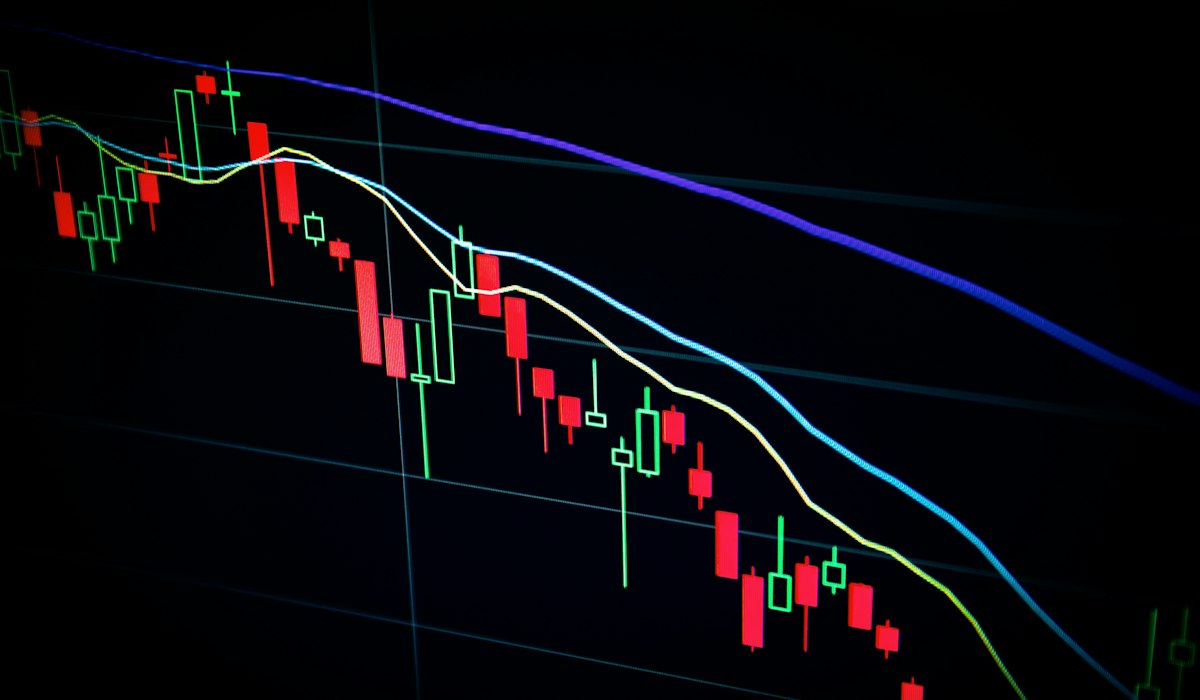
A critical concept for every beginner is that volatility is not the same as permanent loss of capital. Volatility refers to the price fluctuations that happen daily, monthly, and yearly in the open markets.
Historically, the broader stock market experiences a 10% market correction roughly once a year, and a 20%+ bear market every few years. Beginners who panic and sell their investments during standard downturns transform temporary paper volatility into permanent financial losses.
Successful investors recognize that short-term volatility is the price of admission for superior long-term returns. By maintaining a horizon of seven to ten years or longer, short-term market turbulence smooths out into durable upward growth.
How to Get Started in Four Practical Steps
- Verify Your Foundation: Ensure you have eliminated high-interest credit card debt and hold a baseline emergency cash reserve.
- Open the Appropriate Account: Open a tax-advantaged account (such as an IRA, 401(k), ISA, or RRSP depending on your home country) before investing through standard taxable accounts.
- Select Low-Cost Broad-Market Index Funds: Instead of attempting to pick individual winning stocks, buy a low-cost index fund that owns thousands of leading global enterprises simultaneously.
- Automate and Ignore the Noise: Establish an automatic monthly transfer, reinvest all dividends, and avoid monitoring daily financial market headlines.
Frequently Asked Questions
Can I start investing with as little as $50 or $100?
Yes. Modern fintech brokerages offer fractional-share trading and zero account minimums, allowing you to invest in broad-market index funds and blue-chip equities with as little as $1 to $50.
What should I do if the stock market crashes right after I invest?
Do not panic and do not sell. Market corrections and bear markets are standard phases of economic cycles. History demonstrates that every single stock market downturn has eventually recovered and achieved new all-time highs. Selling during a crash locks in permanent losses.
What is the difference between active trading and passive investing?
Active trading involves frequent buying and selling of securities trying to beat market benchmarks, which incurs high taxes, commissions, and poor historical success. Passive investing buys and holds broad-market index funds over decades, reliably capturing economic growth with minimal friction.

Tanisha
Tanisha specializes in practical personal finance, intentional saving strategies, household budgeting systems, and beginner-to-intermediate investment fundamentals. With a background in financial education and consumer economics, she translates complex wealth-building principles into actionable, step-by-step guides for everyday readers.
View all articles by Tanisha →